

Frequently Asked Questions
RESIDENTIAL FAQs
-
Harvest will include up to 1,500 homes across nine neighborhoods, offering a mix of single-family homes, townhomes, cottages, and apartments. The community will develop gradually over 15 years to 20 years, allowing housing types to adapt to local needs. The goal is to create a walkable, bikeable community for full-time valley residents and families, not a golf course development for second homeowners.
-
Harvest Village will exceed Garfield County’s deed-restricted housing requirements. Ten percent of homes will be deed-restricted affordable by Garfield County income standards, and another 20% will be deed-restricted for full-time workers in Garfield, Pitkin, or Eagle counties. By designing efficiently and building at scale, Harvest Village can offer smaller, high-quality homes at attainable prices for even the market rate homes, ultimately creating a true workforce housing community that reflects and supports the people who work in the Roaring Fork Valley.
-
Harvest is designed to serve a wide range of local residents, with a focus on the valley’s middle-income workforce, including teachers, nurses, first responders, and small business owners. These individuals typically earn between $50,000 to $120,000+ per year, which should be sufficient to live in Harvest. Most home sizes will range from 800 square feet to 3,000 square feet, with prices expected to start at $390,000. The should create home ownership opportunities for those who live and work in the Roaring Fork Valley.
-
Harvest will take a different approach to housing in the Roaring Fork Valley by building many homes at once. Most other local projects are small, often fewer than 20 homes, making it difficult to achieve economies of scale. Harvest’s size allows for efficient design, and construction logistics that lower costs without sacrificing quality. Homes will feature thoughtful floorplans and optimized lot sizes, reducing infrastructure and water use. A mix of housing types, including smaller single-family homes, townhomes, and cottages should ensure that teachers, first responders, healthcare workers, and other full-time valley residents can afford the homes and live closer to where they work.
-
In the Roaring Fork Valley, high land and infrastructure costs make density essential for building attainable workforce and affordable housing. By building more homes per acre, like six instead of two, Harvest reduces land and infrastructure costs per house, making homes more affordable and environmentally friendly. A mixed-residential community, like Harvest, is more walkable and bikeable, reducing reliance on cars and easing traffic on Highway 82. This approach helps create a sustainable, affordable community.
-
The rapid rise in housing costs in the Roaring Fork Valley has forced many workers to leave or move west burdening the housing supply in Rifle, Parachute and Newcastle. A mix of housing types is essential to address this. Not all workers are ready to, or want to, buy a home. Rental housing helps workers get established in the valley. It helps employers attract workers and helps workers relocate to the area, explore neighborhoods, and save for a future down payment. Renting also offers flexibility. Helping workers get established and supports the overall economy and community services.
-
This site offers a rare opportunity in the Roaring Fork Valley as it's one of the few large, developable properties with direct access to Highway 82, existing utilities, and vested development rights. These factors make it an ideal location to build housing that serves the local workforce. When workforce housing is developed west of I70, it means longer commutes, more traffic through Glenwood Springs, and higher emissions. By locating homes closer to jobs and services, we’re aiming to reduce those problems while supporting the people who make this valley work. Harvest helps ensure the Roaring Fork Valley remains a vibrant, diverse place, not just a destination for second homeowners and retirees, but a community where local families and workers can thrive.
-
Harvest is intentionally designed to attract families and working residents, not retirees or second homeowners. Smaller homes and smaller lots make living here more affordable for those who work in the valley. By avoiding costly amenities like a golf course, infrastructure expenses are kept lower and makes the community less attractive for second homeowners.
WILDLIFE FAQs
-
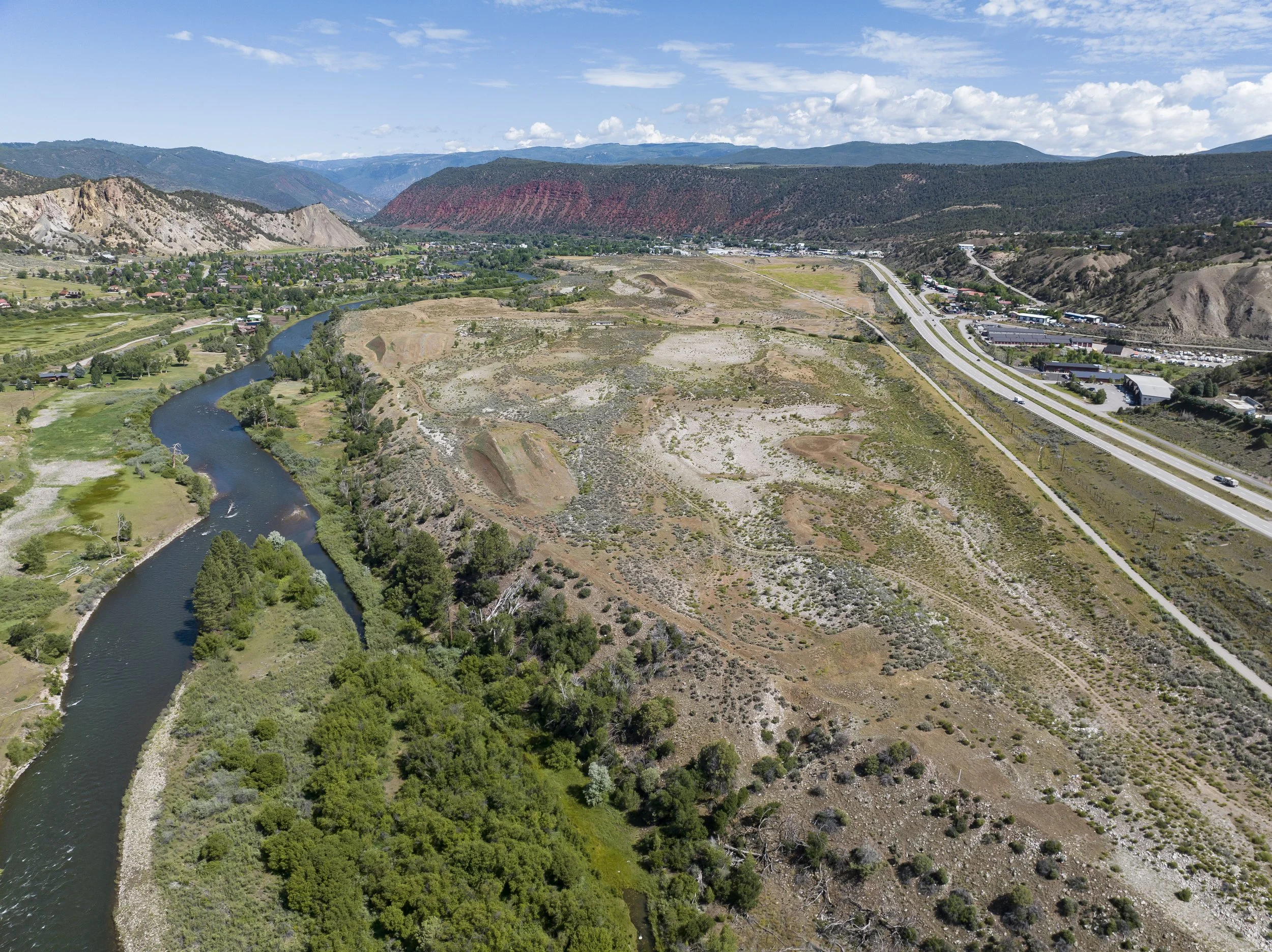
The 2005 mass grading of the property and the construction of the Highway 82 wildlife fence have impacted wildlife movement in this area. The 2022 biodiversity study done by the Colorado Natural Heritage Program shows that the wildlife fence has effectively halted the migration of deer and elk across Highway 82 and the Harvest property.
As the community is developed, Harvest will work with the Roaring Fork Conservancy to improve or restore parts of the 54-acre conservation easement.
In addition to the conservation easement area, Harvest will enhance its open spaces to encourage wildlife where suggested by our experts. We are working with The Roaring Fork Conservancy and other wildlife experts to reintroduce native trees, bushes, grasses, and flowers that support birds and mammals. Please see the Wildlife Impact Report performed by Jonathan Lowsky with Colorado Wildlife Sciences for a detailed analysis of the effect Harvest will have on wildlife.
-
The conservation easement is diligently managed by the Roaring Fork Conservancy, ensuring long-term protection of the land and its habitat. The other wildlife areas and open space at Harvest will be governed by the Harvest Village homeowner’s association.
-
Outdoor lighting will follow the strict standards outlined in the PUD guide, page 54, and in the homeowner’s association covenants to minimize light pollution. There are also strict pet regulations in place to protect wildlife. We are also working with the Roaring Fork Conservancy to design fencing along the conservation easement to prevent pets from running into the easement.
ZONING FAQs
-
Harvest uses the county recommended form-based code approach that establishes clear design and quality standards while allowing flexibility as the community develops over time. Detailed site and engineering plans will come as each phase is planned, ensuring each neighborhood meets both County standards and modern design principles.
-
The site is currently zoned Residential Suburban (RS). While existing zoning could allow 500+ large-lot homes, that zoning would mainly attract second homeowners and fail to address local housing needs. The proposed Harvest Village PUD instead follows the County’s Comprehensive Plan, promoting attainable housing, safer highway access, and connected neighborhoods that serve the local workforce while preserving open space and community character.
-
Harvest should help reduce traffic congestion in downtown Glenwood Springs, making it easier for residents and visitors to access local businesses. Right now, people avoid traveling from Carbondale, Aspen Glen, and Ironbridge to shop in Glenwood during peak hours due to the bottleneck of traffic. By providing workforce housing closer to jobs, Harvest reduces long commutes and shifts traffic patterns, helping to create a more accessible and pedestrian-friendly business environment in Glenwood Springs.
-
Harvest directly aligns with the County’s 2030 Comprehensive Plan, which calls for a mix of housing types, parks, trails, open space, and community amenities on this property. The project provides all of these and enhances the riparian corridor and open space adjacent to the Roaring Fork River and Cattle Creek.
WATER & SEWER FAQs
-
There is an existing established water and sewer provider, Roaring Fork Water and Sanitation District (RFWSD). The district was created as far back as when Aspen Glen was developed. The Harvest property has been master planned to be within the RFWSD and is within the districts service plan filed with the State of Colorado. Harvest development is planned to have all water and sewer provided by RFWSD.
-
No. Storm water will be cleaned for water quality prior to being released back into the river. Water will be cleaned as it flows across native grass buffer areas, shallow swales with native vegetation, and small water ponds. This water will be clean as it enters back into the stream system. Therefore, the stormwater Further design and drainage report will be provided as we move to preliminary plan and construction drawings.
SCHOOL FAQs
-
We’re actively engaging with the Roaring Fork school district to understand and support future student needs as the community grows. Our goal is to ensure Harvest complements existing schools in the Roaring Fork Valley.
-
Yes, there will be at least one daycare to service the Harvest community within the village center. We understand there is a lack of childcare in the Roaring Fork Valley, so we will continue to work with various groups to understand how Harvest can help make an impact, and/or if two facilities are needed within the community.
EMERGENCY SERVICES FAQs
-
Harvest includes key infrastructure upgrades that will directly benefit the fire district, including connecting a nearby fire station that currently lacks access to water. We’re continuing conversations with the district to identify how we can further enhance emergency response and community safety, along with discussions on if a new fire station within Harvest would be beneficial for the greater community. .
-
Construction will be phased and carefully monitored to limit disruption to neighbors. Work hours will follow County noise ordinances, and contractors must use dust control measures. Because one of our main contractors is located directly across Highway 82, equipment and truck travel should also be reduced.
-
Yes. Harvest will include fire hydrants and, emergency vehicle turnarounds. In addition, the two new project intersections will improve access for emergency vehicles and reduce serious traffic accidents by 70% or more. The existing Cattle Creek left turn will be removed, eliminating a known safety concern.
-
Wildfire-resistant building materials, landscaping, and irrigation infrastructure are being integrated from the start. We are coordinating with the Carbondale Rural and Fire District on mitigation and evacuation planning. Harvest Village is considered to be one of the lowest fire risk areas of the Roaring Fork Valley.
-
In addition to emergency coordination, Harvest will provide new trails, lighting, and signage that support safe connectivity for pedestrians, cyclists, and emergency personnel throughout the community.